
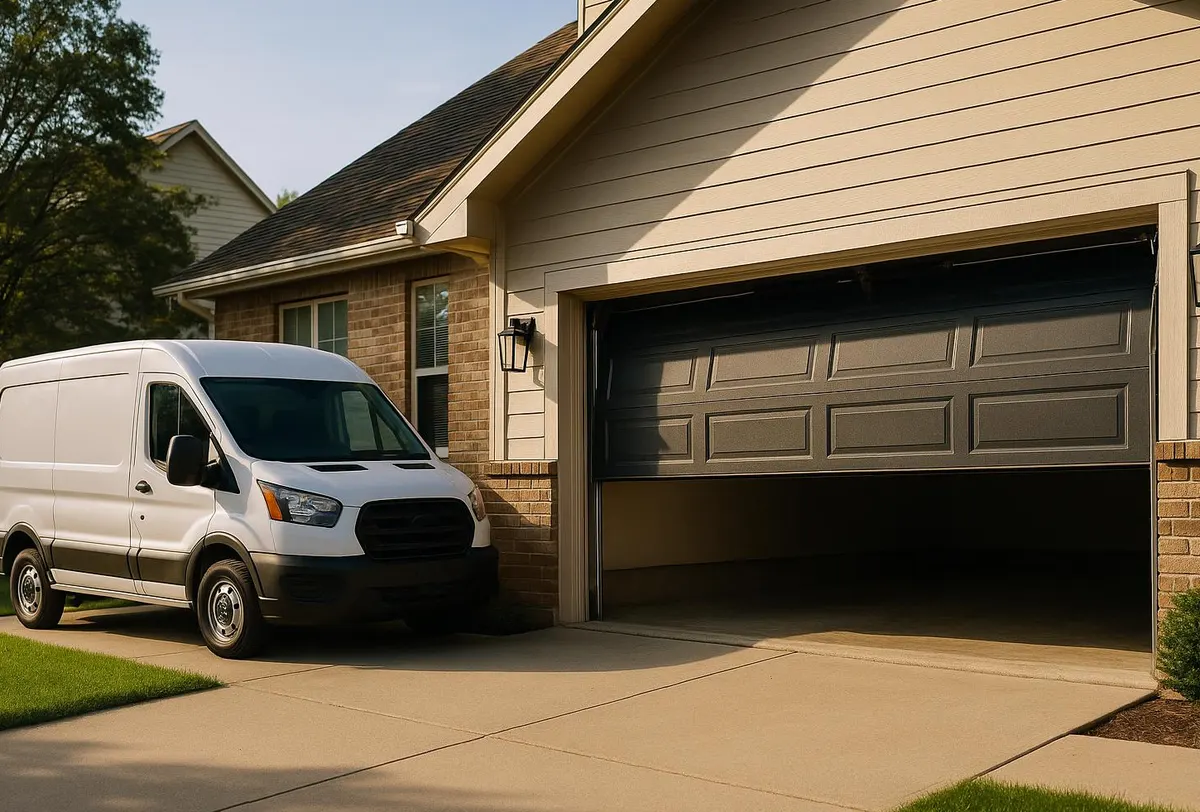
The Moment You Notice It
It usually happens on an ordinary morning. You hit the opener button and the door doesn't glide the way it used to — it hesitates partway up, lurches forward, and you hear a metallic scrape that wasn't there last week. Or maybe you walk past the garage and notice the door looks slightly crooked when it's open, one side sitting higher than the other. Once you see it, you can't unsee it, and most homeowners start wondering if the whole door is about to come off its track.
Symptoms That Point to a Track Problem
- Jerking or hesitating at the same spot every time the door moves, rather than a smooth, continuous motion.
- Grinding or scraping sounds that sound like metal rubbing metal, usually from one side of the door rather than both.
- A visible gap between the rollers and the track, or rollers that look like they're riding on the edge of the track instead of inside it.
- A door that hangs unevenly when fully open, with one corner lower than the other.
- The opener straining — a louder motor hum, or the door reversing on its own mid-cycle because the opener senses resistance it reads as an obstruction.
None of these are things to wait out. A door fighting its track puts extra load on cables, rollers, and the opener itself, and what starts as a cosmetic annoyance can end with the door jumping the track entirely.
What a Technician Checks, in Order
1. Loose or Shifted Track Hardware
The first thing a tech checks is whether the brackets holding the track to the wall and header have simply worked loose. Garage doors cycle thousands of times a year, and the vibration eventually loosens lag bolts and carriage bolts, letting the track drift out of its original line. The fix here is straightforward: retighten the hardware and use a level to re-plumb the track against the frame. This is often the cheapest and fastest fix, assuming the track itself isn't damaged.
2. Impact Damage
Next comes a close look at the track for actual bends — the kind caused by a car bumper clipping it, a bike or lawn mower tipping into it, or a basketball slamming the door at an angle. Minor bends can sometimes be carefully straightened in place with locking pliers and a rubber mallet. More significant bends, especially kinks that have crimped the metal, usually call for replacing that section of track rather than fighting to reshape it, since a track that's been bent once is weaker at that point going forward.
3. Damaged Door Panels Pulling the Rollers Off-Line
Sometimes the track itself is fine but a dented or warped panel is pulling the rollers out of their natural path. This is especially common with older steel doors around West Chester that have taken a hit over the years or developed slight warping with age. The fix depends on the door: a single damaged panel can sometimes be replaced if the manufacturer and model are still available, but on an older door with discontinued panels, a full door replacement may end up being the more practical option.
4. Worn or Dirty Rollers
Rollers that have worn unevenly, or have accumulated grit and road salt tracked in from winter driving, create friction that mimics a bent track even when the rail is perfectly straight. The technician checks the rollers for flat spots, cracking, or excessive play in the stem. The fix is roller replacement and proper lubrication, which is a small job that often solves what looked like a bigger problem.
5. House Settling and Frame Movement
A lot of the housing stock in this part of Chester County is older, and older foundations settle gradually over the decades. That slow shift can nudge the door frame and header just enough to throw the track out of plumb, even if nothing was ever hit. This isn't a quick tighten-and-go fix — it usually means reshimming the brackets to the new reality of the frame, and in more significant cases, checking whether the opening itself is still square before reinstalling track.
6. Seasonal Freeze-Thaw Movement
Freeze-thaw cycles through our snowy, icy winters cause minor frost heave near the slab and foundation edge, which can shift a track's alignment just enough to notice right as cold weather sets in. If a track problem tends to show up every fall or after a hard freeze, this seasonal movement is often the underlying cause, and it's worth flagging to your technician so they check the mounting points rather than just the visible bend.
When to Call West Chester Garage Door
If your door is scraping, hesitating, or hanging crooked, don't keep running it through cycles hoping it works itself out — a track under stress can let a roller jump free, and at that point you're looking at an emergency repair instead of a routine one. Our Garage Door Repair technicians diagnose the issue in the order above, from loose hardware up through frame movement, and fix the actual cause rather than just bending metal back into rough shape. If this is the second or third time you've dealt with alignment trouble, ask about our Preventive Maintenance service, which catches loose brackets and worn rollers before they turn into a jerking, scraping door.
If your garage door in West Chester, Exton, Downingtown, Malvern, Glen Mills, Media, Kennett Square, or Paoli is giving you trouble, call West Chester Garage Door today and we'll get it running smoothly and safely again.