
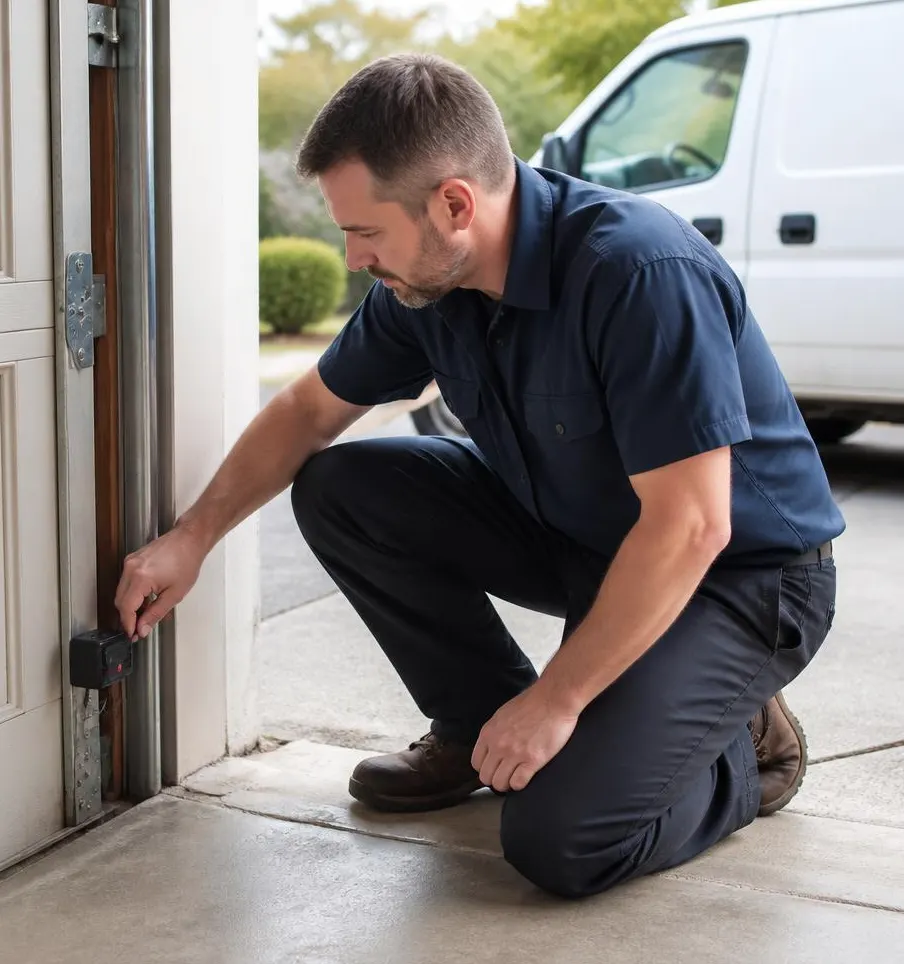
A technician pulls up to a Chester County driveway where the homeowner has already made up their mind: the original door is done. It's the one that came with the house decades ago, the panels are dented from a winter of ice buildup, the opener groans, and the bottom seal has been letting cold air and road salt spray into the garage for years. The question is almost always the same: "So what's this actually going to cost me?" The honest answer is that it depends on a handful of specific choices, and understanding those choices ahead of time makes the quote make sense instead of feeling like a guess.
What Actually Drives the Price
Garage door installation pricing isn't random. A few variables account for almost all of the difference between a budget job and a premium one.
Material and Construction
Steel is the baseline material for most residential doors because it's durable and affordable. Within steel, though, there's a wide range: single-layer steel is the cheapest, while two- or three-layer steel with insulation sandwiched in between costs more but holds up better to temperature swings. Wood and composite doors cost more upfront and need more upkeep. Aluminum and glass doors sit in a similar price tier to mid-range steel but trade insulation value for a modern look.
Insulation
An insulated door (look for an R-value rating) keeps the garage noticeably warmer in winter and cooler in summer. For homes where the garage shares a wall with living space, or where temperature swings are extreme, insulation is worth the upgrade cost. It also tends to make the door quieter and sturdier against wind.
Size and Configuration
A single-car door is cheaper than a double. Custom sizes, common in older housing stock where garage openings weren't built to today's standard dimensions, add cost because the door has to be fabricated rather than pulled off a shelf.
Style and Hardware
A plain raised-panel steel door is the most economical option. Carriage-style doors, with decorative hinges, handles, and sometimes real or faux wood overlays, cost significantly more because of the added hardware and design work, even when the underlying material is still steel.
Opener, Springs, and Track
If the opener is being replaced at the same time, that's a separate line item, typically ranging from a few hundred dollars for a basic chain-drive unit to more for a quiet belt-drive model with smart features. New springs, cables, rollers, and track are often bundled into a full installation, especially if the old hardware doesn't match the new door's weight.
Removal and Site Conditions
Hauling away the old door, adjusting an out-of-square opening (common in older homes that have settled over the years), or rewiring for a new opener all add labor time.
Typical Price Ranges, Installed
These are national ranges, not local quotes — actual pricing depends on the specific door, opener, and site conditions. They're meant to give a realistic starting point for budgeting.
- Basic single-layer steel door: roughly $700–$1,500 installed for a standard single-car size.
- Insulated double-layer or triple-layer steel door: roughly $1,200–$2,500 installed, depending on size and R-value.
- Wood or composite door: roughly $2,000–$4,500 installed, with real wood trending toward the higher end.
- Custom carriage-style steel door: roughly $2,500–$5,000+ installed, depending on hardware, window inserts, and faux-wood finishes.
- High-end custom wood carriage door: can run $5,000–$10,000+ installed for large openings with full custom millwork.
Opener replacement typically adds $300–$1,000 depending on drive type and smart-home features, and full hardware replacement (springs, cables, track) can add a few hundred dollars more if the old parts aren't reusable.
Local Factors Worth Weighing
Winters here bring snow, ice, and repeated freeze-thaw cycles, and that combination is hard on uninsulated steel and untreated wood alike. Road salt tracked in on tires also accelerates rust on lower-quality hardware. For homes with an older door that's original to the house, it's common to find an opening that's slightly out of square or sized differently than today's standard doors, which is why a proper measurement and site visit matters more than a phone quote. If the garage is attached to living space, insulation pays for itself in comfort fairly quickly, especially during a hard nor'easter when wind-driven cold finds every gap.
Repair or Replace?
Not every rough winter means a new door. If the panels are intact, the track is straight, and the issue is a broken spring, worn rollers, or a failing opener, repair is usually the better value. Replacement makes more sense when the door is visibly rusted through, panels are warped or dented beyond cosmetic fixes, the door is drafty despite weatherstripping, or repair costs start approaching a significant fraction of a new door's price.
When to Call West Chester Garage Door
If you're not sure which side of that line you're on, that's exactly the call to make before spending money either way. West Chester Garage Door can inspect the current door, give a straight answer on whether Garage Door Repair will get you through another winter or whether Garage Door Installation is the smarter long-term move, and walk through material, insulation, and opener options that fit the house and the budget — not just a generic price list.
If you're in West Chester, Exton, Downingtown, Malvern, Glen Mills, Media, Kennett Square, Paoli, or anywhere nearby and you're weighing a new garage door before winter sets in, call West Chester Garage Door for an honest assessment and a clear, written quote.